Published: 7 March 2025
Lettuce production in the UK is being transformed through a collaboration between the University of Essex Robotics group, spin-out Versatile RobotX and leading grower JEPCO, focused on integrating robotics and artificial intelligence into large-scale agricultural operations.
The work forms part of the SCARLETT project (SCAlable, structured and Resource efficient indoor robotic harvesting of LETTuce), which investigates how entire crop production systems can be redesigned to enable robotic automation rather than simply retrofitting technology into existing workflows.
The project takes a systems-level approach, analysing each stage of lettuce production—including transplanting, movement, harvesting, and packaging—to identify opportunities where robotics can deliver efficiency gains and reduce reliance on manual labour.
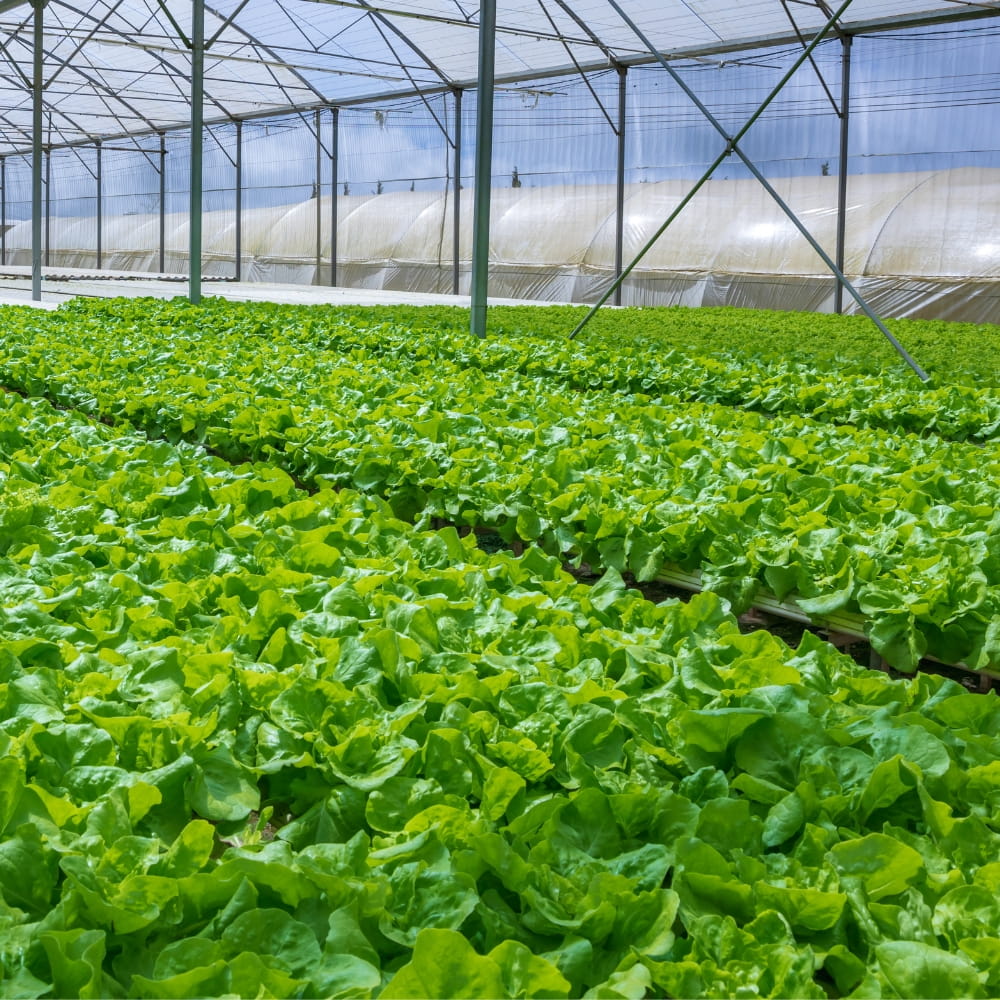
This approach is particularly relevant in hydroponic greenhouse environments, where high throughput and continuous production cycles demand consistent, repeatable handling processes. By introducing robotics into these workflows, the system aims to enable scalable, year-round production while maintaining product quality.
“This was an ambitious project that has the potential to transform how produce is moved and handled in our greenhouse operations by bringing in robotics where repetitive tasks and tasks where staff are underutilised makes absolute sense.”
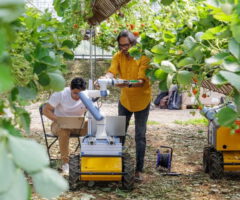
The technical approach integrates machine learning-based visual detection, classification, and point-cloud analysis of crops, enabling precise identification and localisation of lettuce plants at different growth stages. These perception systems are coupled with advanced robotic manipulation using specialised tools, including soft grippers, magnetic end-effectors, and cutting mechanisms designed for delicate crop handling.
In addition to manipulation, the system incorporates mobile robotics and automated handling processes, enabling coordination across multiple stages of the production workflow. This supports higher throughput, improved consistency, and reduced manual intervention across the production line.
The project
has demonstrated the potential to significantly improve operational efficiency while supporting 52-week production cycles in UK agriculture.
“This feasibility project was very timely, due to the system we use has not generally looked at automation for handling and movement of crop. With the issue around labour shortage and the desire to use hydroponic techniques efficiently and look to the future with modern methods, it has been great to see how far we can go.”
Beyond individual task automation, the work demonstrates how agricultural systems can be restructured to better align with robotic capabilities, enabling more efficient interaction between crops, infrastructure, and intelligent machines.
“The redesigning of harvesting processes and embedding of robotics and artificial intelligence has delivered higher-efficiency in food production which can be used for lettuces and then extended to other produce.”
The project is supported by UK Research and Innovation (UKRI) through the Defra Farming Innovation Programme, reflecting its potential to transform food production by improving efficiency, addressing labour shortages, and enhancing sustainability across the sector.
This work establishes a scalable model for robotic agriculture, forming a key part of the technology foundation being commercialised by Versatile RobotX.