Published: 3 July 2025
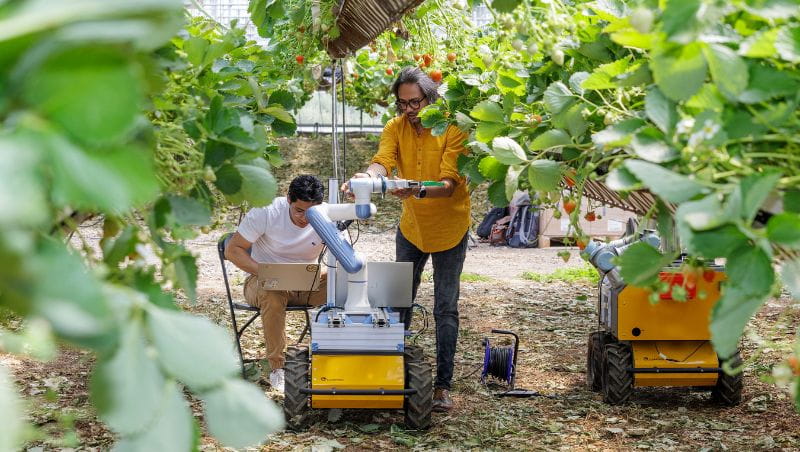
A new generation of robotic harvesting systems is now entering field trials in Essex, representing a significant step towards scalable agricultural automation. The trials form part of a £1 million programme led by the University of Essex and conducted in collaboration with Wilkin & Sons.
The systems are designed to address one of the most pressing challenges in modern farming: the availability and cost of labour for harvesting delicate crops such as strawberries. These crops require careful handling and rapid processing, placing significant demand on seasonal labour forces.
The latest generation of robots integrates artificial intelligence, machine learning, and robotic manipulation to autonomously identify ripe fruit, pick it with precision, and package it in real time within commercial growing environments.
A key focus of the development programme has been cost reduction alongside performance improvement. The second-generation system has been developed at approximately one-fifth of the cost of earlier prototypes while retaining core functionality through reuse of the established perception and decision-making architecture.
“The focus has always been on speed, precision, and the cost to build a commercially viable product.”
The robotic platform is capable of operating in unstructured agricultural environments, using computer vision to detect ripeness and robotic actuation to perform delicate picking actions without damaging fruit or surrounding plants. This represents a significant advancement over traditional harvesting approaches, which rely heavily on manual labour.
The development programme is progressing towards multi-unit deployment, with plans to trial multiple robots simultaneously and extend the system to additional crop types and applications.
By combining cost-effective engineering with scalable system design, the project aims to enable widespread adoption of automation in agriculture, supporting improved productivity, reduced labour dependency, and more resilient food production systems.
This work forms a critical part of the commercialisation pathway for Versatile RobotX, which is focused on deploying these technologies as field-ready robotic solutions across agriculture.